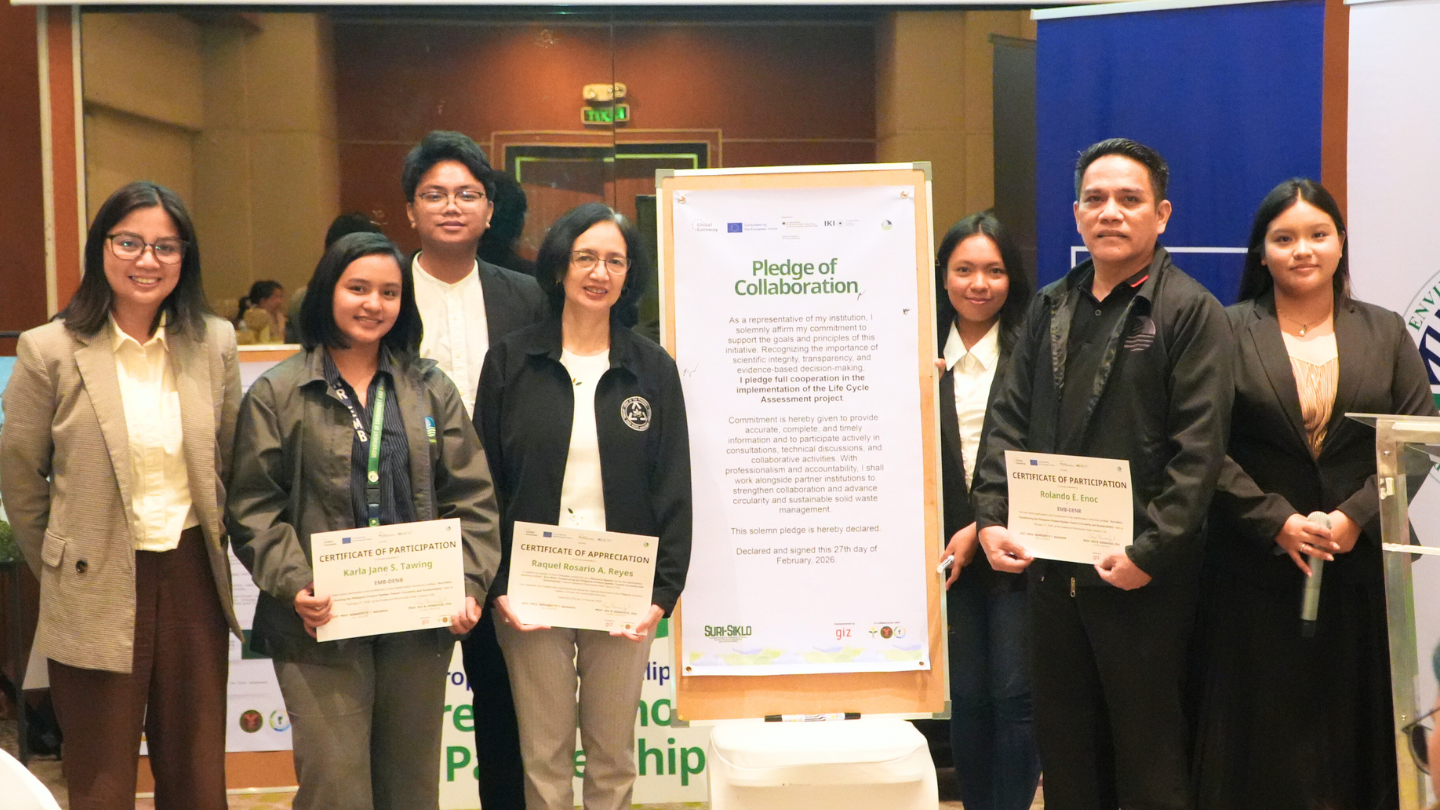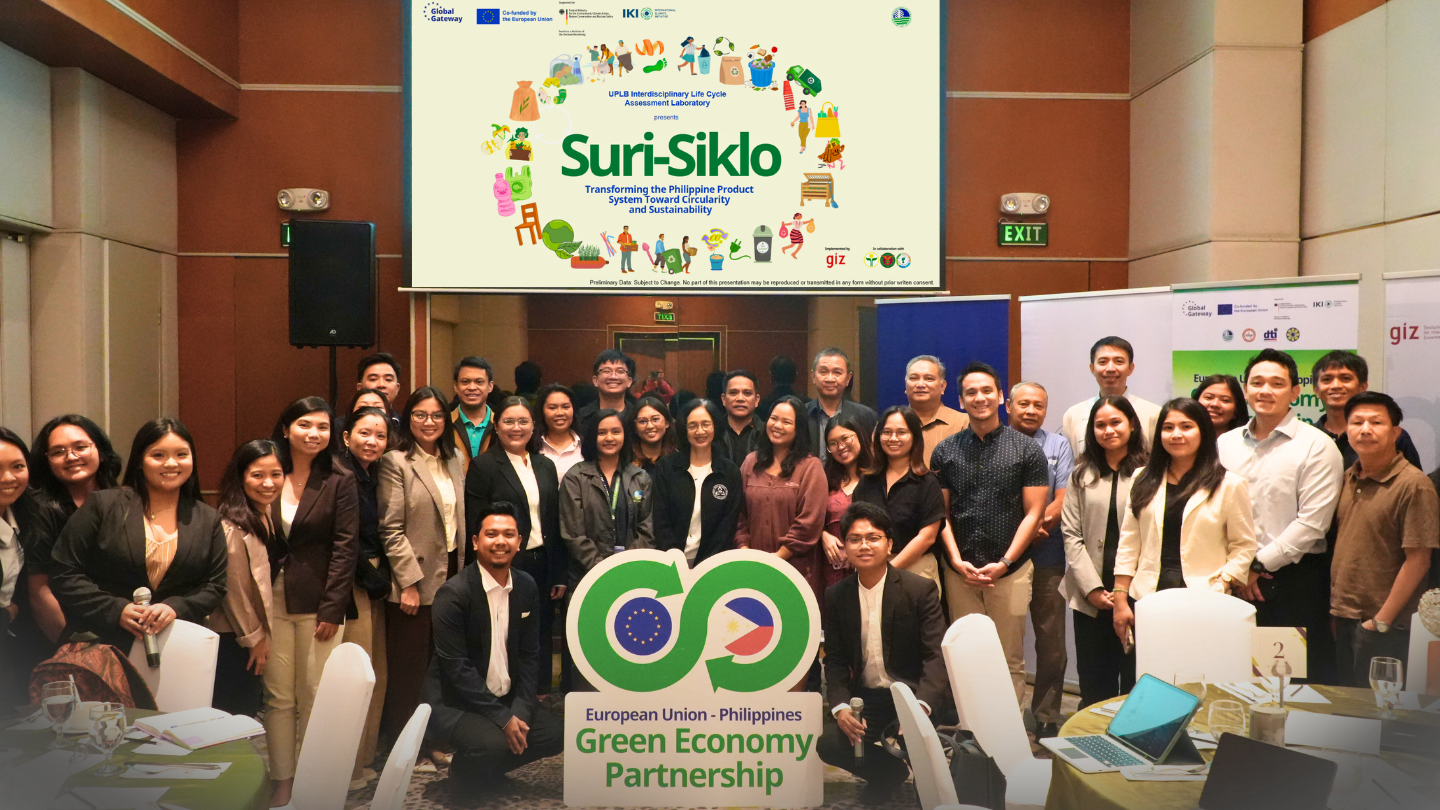
In cooperation with DENR-Environmental Management Bureau (DENR-EMB), the University of the Philippines Los Baños-Interdisciplinary Life Cycle Assessment Laboratory (UPLB-ILCAL) convened key stakeholders for the workshop “Suri-Siklo: Transforming the Philippine Product System Toward Sustainability and Circularity.”
This activity forms part of a broader project on the Life Cycle Assessment (LCA) of Potentially Non-Environmentally Acceptable Products (NEAP) in the Philippines, supported by the EU–Philippines Green Economy Partnership – a P3.67 billion (€60 million) flagship programme of the European Union (EU) under its Global Gatreway initiative, the European strategy engaging with partners globally and promoting investments around shared priorities such as the transition to a green economy. The Policy and Alliances component of the programme – co-funded with a €12 million grant from the European Union and a €1 million contribution from the International Climate Initiative of the German Federal Ministry for the Environment, Climate Action, Nature Conservation, and Nuclear Safety and implemented by GIZ Philippines – support policy development and partnership building.
Integrating Science-Based and Industry-Ready Approaches
The workshop aims to align scientific research with industry perspectives that will support evidence-based policy development toward a more sustainable consumption and production in the Philippines.
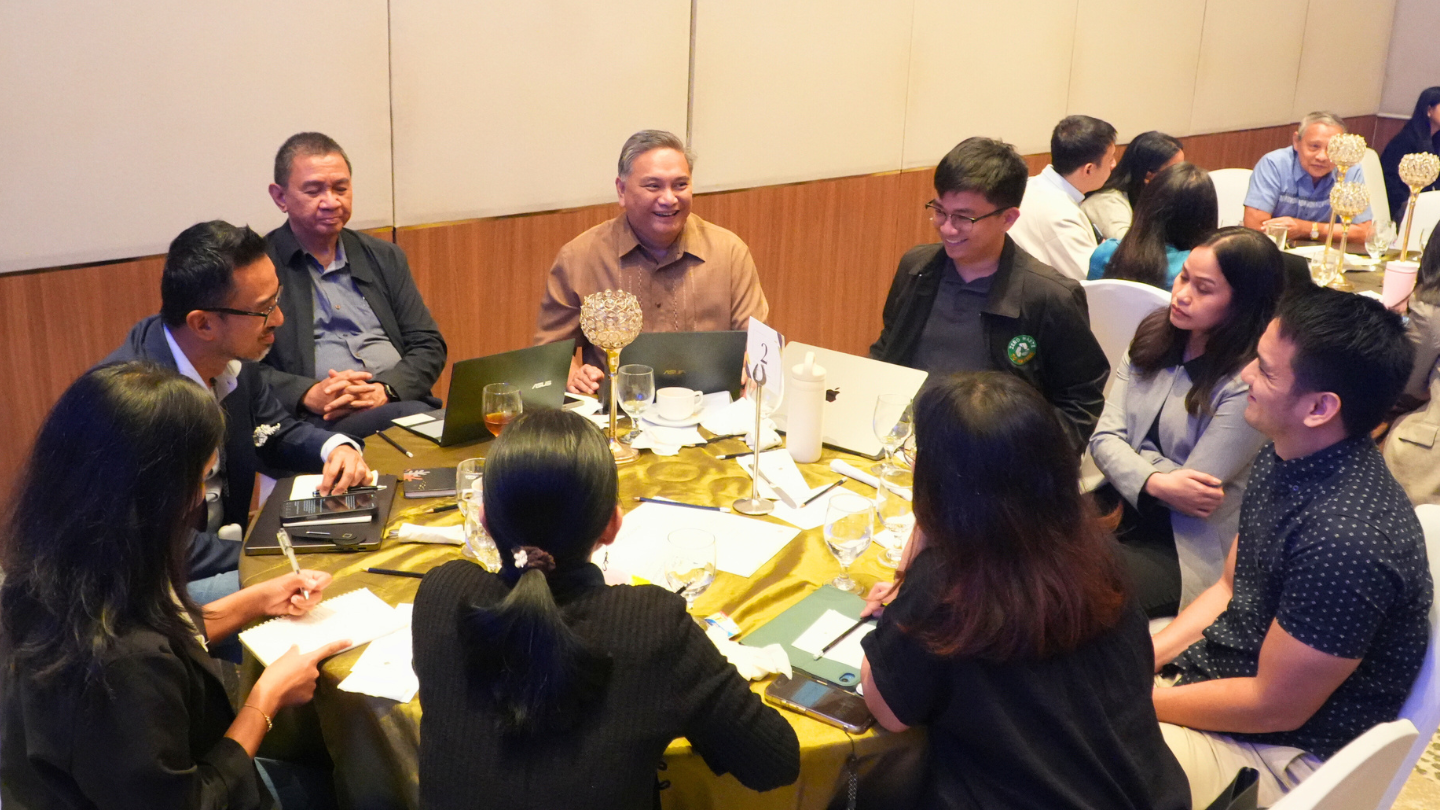
A key outcome of the workshop was to gather valuable insights from industry stakeholders, including the Philippine packaging sector, which will directly guide the LCA of selected products. Participants shared insights on production processes, material use, and existing sustainability practices, helping ensure that LCA are grounded in industry context. This exchange strengthens the relevance and accuracy of assessments, enabling more robust and science-based evidence.
In addition, the workshop facilitated technical discussions on LCA approaches and methodologies. By bridging the gap between academic research and industry practice, stakeholders were able provide recommendations such as improving framework foundations and product selection that will form part of the LCA.
Closing the Loop towards Sustainable Consumption and Production
The integration of industry perspectives into the LCA represents an important step toward evidence-based policymaking. Insights from the LCA will support informed government decision-making, strengthening policy development in advancing sustainable consumption and production in the country.
Importantly, the activity fostered a shared commitment among participants for full cooperation in the implementation of the LCA. The collective pledge reflected strong collaboration, highlighting the need to “close the loop” in local value chains and accelerate the Philippines’ transition to a low-carbon, circular economy.